
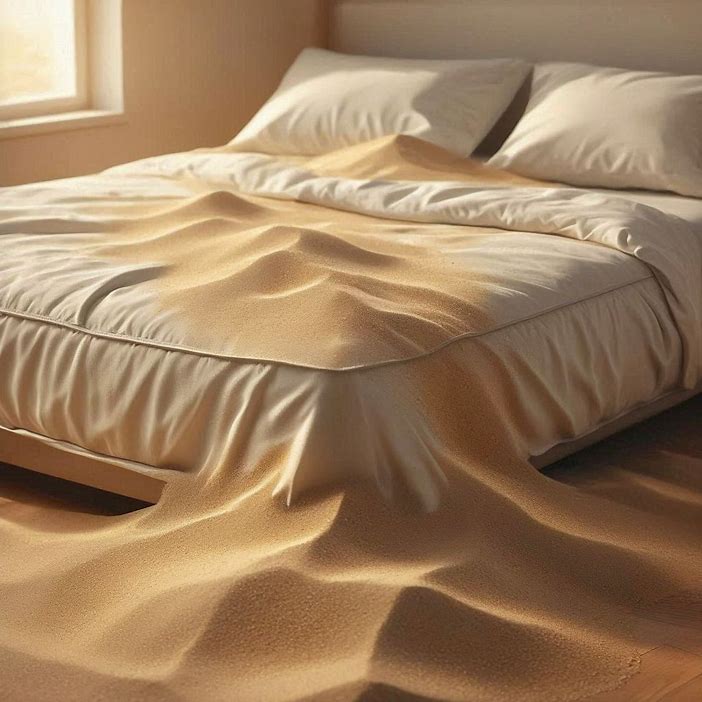
A bed that constantly feels sandy, gritty, dusty, or grainy can be surprisingly uncomfortable and frustrating. Even after washing the sheets, vacuuming the mattress, or cleaning the room, the rough texture may return quickly and make it difficult to relax or sleep comfortably.
In many cases, the “sandy” feeling is not actual sand at all. It is often caused by a combination of body oils, dead skin cells, detergent residue, dust, fabric wear, sweat crystals, pet debris, or tiny particles trapped in bedding fibers. Environmental factors like dry air, poor ventilation, and dirty mattresses can also contribute to the problem.
The good news is that identifying the underlying cause usually makes the issue much easier to fix. In this guide, you’ll learn the most common reasons your bed feels sandy, how to clean and restore your bedding properly, and the best ways to prevent the gritty feeling from returning.
Common Reasons Your Bed Feels Sandy
Several different issues can create a gritty or grainy sensation in bedding.
Dead Skin Buildup
Your body naturally sheds thousands of dead skin cells every day.
These skin flakes accumulate on:
- Sheets
- Pillowcases
- Mattress surfaces
- Blankets
Over time, the buildup can create a rough, dusty feeling that resembles fine sand.
Signs This Is the Problem
- The bed feels gritty shortly after cleaning
- Dust appears when shaking blankets
- You experience dry skin
Detergent Residue in Bedding
Residual laundry detergent is one of the most overlooked causes of sandy-feeling sheets.
Too much detergent or poor rinsing leaves soap particles trapped in fabric fibers.
This can make bedding feel:
- Crunchy
- Grainy
- Rough
- Stiff
Common Causes
- Using too much detergent
- Hard water
- Overloaded washer
- Insufficient rinse cycles
Sweat and Salt Residue
When sweat dries, it leaves behind natural salts and minerals on fabrics.
Over time, these deposits can create a rough texture.
This is especially common if:
- You sweat heavily at night
- Bedding is not washed frequently
- Humidity levels are high
Dirty Mattress Surface
Even if your sheets are clean, the mattress underneath may contain:
- Dust
- Skin flakes
- Dirt particles
- Crumbs
- Pet hair
These particles can press upward through thinner sheets and create a gritty feeling.
Dust and Dirt From the Room
Dust circulating through the bedroom eventually settles onto bedding.
This is more noticeable if:
- Floors are carpeted
- Windows stay open often
- Pets sleep on the bed
- The room is dusty
Worn-Out Sheets
Old bedding gradually loses softness as fibers break down.
Damaged fibers may feel:
- Rough
- Scratchy
- Sandy
Lower-quality microfiber sheets sometimes develop this texture faster.
Pet Dander and Debris
Pets can track tiny particles onto the bed, including:
- Dirt
- Litter
- Sand
- Dry skin flakes
- Hair
Even small particles trapped in fabric can create a gritty sensation.
Hard Water Mineral Deposits
Hard water leaves mineral buildup inside fabrics over time.
This can make sheets feel:
- Stiff
- Coarse
- Chalky
- Sandy
Minerals combine with detergent and create residue inside fibers.
Mold or Mildew Particles
Damp bedding sometimes develops mildew or microscopic buildup that changes fabric texture.
Musty odors often accompany this issue.
Sand or Outdoor Debris
In some cases, actual sand or dirt may be entering the bed from:
- Shoes
- Clothing
- Beach trips
- Pets
- Open windows
Fine particles easily become trapped in bedding fibers.
How To Identify the Exact Cause
Understanding the source makes treatment much easier.
Check the Texture Carefully
Powdery or Dusty Feeling
Usually caused by:
- Skin flakes
- Dust
- Dirt
Crunchy or Stiff Feeling
Often linked to:
- Detergent residue
- Hard water minerals
- Sweat salts
Oily Gritty Feeling
May result from:
- Body oils
- Dirty mattress
- Hair product transfer
Smell the Bedding
Musty Odor
May indicate:
- Moisture buildup
- Mildew
- Dirty mattress
Strong Fragrance Smell
Often suggests detergent buildup.
Inspect the Mattress
Remove all bedding and inspect:
- Mattress surface
- Mattress seams
- Mattress protector
Look for:
- Dust
- Debris
- Stains
- Crumbs
How To Fix Sandy-Feeling Bedding
Once you identify the likely cause, you can clean and restore the bed more effectively.
Wash Bedding Properly
Improper washing is a major contributor to rough-feeling sheets.
Best Washing Practices
- Use less detergent
- Avoid overloading the washer
- Use warm water when safe
- Add an extra rinse cycle
Use White Vinegar During Washing
White vinegar helps remove:
- Detergent residue
- Hard water minerals
- Odors
How To Use It
Add:
- 1 cup white vinegar
during the rinse cycle.
Do not mix vinegar directly with bleach.
Use Baking Soda for Deep Cleaning
Baking soda helps soften fabrics and remove buildup.
Instructions
- Add ½ cup baking soda to the washer drum.
- Wash bedding normally.
- Use warm water if possible.
Vacuum the Mattress Thoroughly
Mattresses collect large amounts of hidden debris.
Vacuum These Areas
- Mattress surface
- Edges
- Seams
- Under the bed
Use an upholstery attachment if available.
Wash or Replace Mattress Protectors
Mattress protectors trap:
- Sweat
- Skin flakes
- Dust
Dirty protectors often cause rough bedding sensations.
Replace Worn-Out Sheets
Older sheets sometimes cannot regain softness fully.
Signs It’s Time To Replace Them
- Fabric thinning
- Persistent roughness
- Pilling
- Fading
- Fiber breakdown
Higher-quality cotton sheets usually stay softer longer than cheap microfiber.
Reduce Dust in the Bedroom
Cleaner air means cleaner bedding.
Helpful Steps
- Vacuum floors regularly
- Dust furniture weekly
- Use an air purifier
- Wash curtains occasionally
- Keep pets off the bed if possible
Shower Before Bed
Going to bed clean reduces:
- Sweat
- Oils
- Dirt
- Skin flakes
This helps bedding stay fresher longer.
Exfoliate Dry Skin
Excess dry skin often contributes to gritty bedding.
Using gentle moisturizers and exfoliation may help reduce shedding.
Control Humidity Levels
High humidity encourages:
- Sweat buildup
- Mildew
- Sticky fabrics
Ideal Indoor Humidity
Around:
- 30–50%
A dehumidifier may help in humid climates.
Deep Clean the Mattress Occasionally
Mattresses benefit from periodic deep cleaning.
Simple Mattress Cleaning Method
- Vacuum thoroughly.
- Sprinkle baking soda over the surface.
- Let sit for several hours.
- Vacuum again.
This helps absorb odors and fine debris.
How Often To Wash Bedding
Frequent washing helps prevent buildup.
Recommended Schedule
Sheets and Pillowcases
- Every 1–2 weeks
Mattress Protectors
- Every 1–2 months
Blankets and Comforters
- Every few months
More frequent washing may be needed if:
- You sweat heavily
- Pets sleep on the bed
- Allergies are present
Best Bedding Materials for Softness
Some fabrics naturally feel smoother and cleaner longer.
Good Options
- Cotton percale
- Cotton sateen
- Bamboo blends
- Linen blends
- High-quality microfiber
Natural breathable fabrics often accumulate less residue.
Common Mistakes To Avoid
Using Too Much Detergent
Excess soap creates residue buildup quickly.
Ignoring the Mattress
Clean sheets alone cannot solve problems caused by a dirty mattress.
Overusing Fabric Softener
Fabric softener may trap oils and residue in bedding fibers.
Leaving Bedding Damp
Damp fabrics can develop mildew and roughness.
Skipping Extra Rinse Cycles
Extra rinsing helps remove minerals and detergent fully.
Could Allergies Be Involved?
Sometimes the “sandy” feeling is partly sensory irritation from:
- Dust mites
- Allergens
- Dry skin
- Fabric irritation
People with allergies may become more sensitive to tiny particles in bedding.
When To Replace the Mattress
In rare cases, an aging mattress itself causes persistent gritty sensations.
Signs of Mattress Breakdown
- Crumbling foam
- Internal material leakage
- Persistent dust
- Sagging
- Strong odors
Older foam mattresses sometimes release degraded particles over time.
Frequently Asked Questions
Why do clean sheets still feel gritty?
Detergent residue, hard water minerals, or mattress debris are common causes.
Can hard water make sheets feel sandy?
Yes. Mineral deposits can leave fabrics rough and stiff.
Does fabric softener help?
Sometimes temporarily, but overuse may worsen buildup over time.
Why does my bed feel dusty so quickly?
Dead skin, room dust, pets, and dirty mattresses often contribute.
Can sweat cause rough bedding?
Yes. Sweat leaves salt and mineral residue that can stiffen fabrics.
Final Thoughts
If your bed always feels sandy, the problem is usually caused by buildup rather than actual sand. Dead skin cells, detergent residue, sweat salts, dust, mattress debris, and worn-out bedding are some of the most common culprits.
Fortunately, improving laundry habits, deep-cleaning the mattress, reducing dust, and using less detergent often solve the problem quickly. Regular washing, proper rinsing, and maintaining a cleaner sleeping environment can restore softness and make your bed feel fresh and comfortable again.
Once you identify the real cause, the gritty sensation usually becomes much easier to eliminate permanently.