
Many people use OxiClean products to remove stains, brighten laundry, and clean household surfaces. Because it is such a powerful cleaner, a common question is whether OxiClean is also a disinfectant that kills germs, bacteria, viruses, and fungi.
The short answer is that most standard OxiClean products are cleaners and stain removers, not true disinfectants. While they can help remove dirt, odors, and some microorganisms during cleaning, they are generally not registered disinfectants designed to fully sanitize surfaces or fabrics in the same way as bleach or EPA-registered disinfecting products.
However, some specialized OxiClean formulas may contain additional antibacterial ingredients, which can create confusion. Understanding the difference between cleaning, sanitizing, and disinfecting is important if you want to properly remove germs from laundry or household surfaces.
In this guide, you’ll learn exactly what OxiClean does, whether it disinfects, how it compares to bleach and laundry sanitizers, and when you may need a true disinfectant instead.
What Is OxiClean?
OxiClean is a cleaning product line primarily known for:
- Stain removal
- Laundry boosting
- Whitening
- Brightening
- Odor removal
Many OxiClean products use oxygen-based cleaning agents rather than chlorine bleach.
The main active ingredient in many formulas is sodium percarbonate, which releases hydrogen peroxide when dissolved in water.
What Does “Disinfectant” Actually Mean?
A disinfectant is a product specifically designed to kill or inactivate harmful microorganisms such as:
- Bacteria
- Viruses
- Fungi
True disinfectants are usually tested and registered for germ-killing effectiveness.
Cleaning products and disinfectants are not always the same thing.
Difference Between Cleaning and Disinfecting
Cleaning
Cleaning removes:
- Dirt
- Oils
- Debris
- Some germs physically
Soap and detergents mainly clean surfaces.
Disinfecting
Disinfecting kills microorganisms using chemical agents or heat.
This process targets:
- Bacteria
- Viruses
- Mold
- Fungi
Is Standard OxiClean a Disinfectant?
Generally, no.
Most regular OxiClean products are not classified as disinfectants.
They are mainly designed to:
- Remove stains
- Break down organic matter
- Whiten fabrics
- Eliminate odors
Although oxygen cleaners may reduce some microbes during cleaning, they are not usually intended to replace disinfecting products.
Why OxiClean Can Still Make Things Feel Cleaner
Even without being a true disinfectant, OxiClean often improves cleanliness significantly because it:
- Lifts dirt effectively
- Removes organic buildup
- Helps wash away bacteria physically
- Breaks down odors
Removing grime and residue can indirectly reduce germs, but that is different from fully disinfecting.
Does OxiClean Kill Bacteria?
It may reduce some bacteria during cleaning, especially when used with warm water and proper washing.
However:
- Standard formulas are not typically marketed as hospital-grade disinfectants
- They are not guaranteed to kill all harmful microorganisms
For situations requiring disinfection, stronger or EPA-registered disinfecting products are usually recommended.
Does OxiClean Kill Viruses?
Most standard OxiClean products are not specifically designed or approved to kill viruses reliably.
For virus disinfection, products such as:
- Bleach
- Alcohol disinfectants
- EPA-approved disinfecting sprays
are generally more effective.
Does OxiClean Kill Mold or Fungus?
Oxygen cleaners may help remove mold stains and mildew odors from surfaces or fabrics.
However:
- Removing mold stains does not always mean the mold spores are fully killed
- Severe mold contamination often requires dedicated mold-cleaning products
For fungal infections like ringworm, proper antifungal treatment and high-heat laundering are more reliable.
Is OxiClean a Sanitizer?
Cleaning, sanitizing, and disinfecting are different levels of germ control.
Sanitizing
Sanitizing reduces bacteria to lower levels considered safer by public health standards.
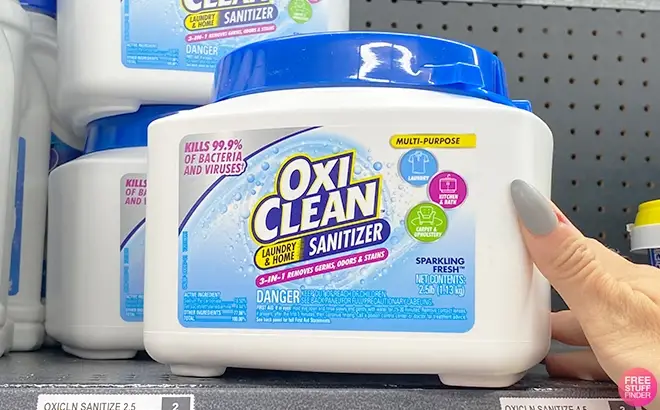
Some OxiClean formulas may contribute to partial sanitizing through cleaning action, but standard products are not primarily marketed as sanitizers.
Does OxiClean Disinfect Laundry?
Regular OxiClean laundry products mainly:
- Remove stains
- Brighten fabrics
- Boost detergent performance
They do not necessarily disinfect fabrics completely.
For laundry disinfection, people often use:
- Hot water
- Chlorine bleach
- Laundry sanitizers
- High dryer heat
OxiClean vs Bleach
Many people compare oxygen cleaners to chlorine bleach.
OxiClean (Oxygen Cleaner)
Benefits
- Safer for colors
- Less harsh smell
- Gentler on fabrics
- Effective stain remover
Limitations
- Usually not a strong disinfectant
- Slower germ-killing action
Chlorine Bleach
Benefits
- Strong disinfectant
- Kills bacteria and viruses effectively
- Whitens fabrics
Limitations
- Can damage colors
- Harsh fumes
- May weaken fabrics over time
Can OxiClean Be Used With Disinfectants?
Sometimes yes, but caution is necessary.
Never mix cleaning products unless the manufacturer specifically says it is safe.
Avoid mixing OxiClean with:
- Ammonia
- Certain acids
- Unknown chemicals
Improper chemical mixing can create dangerous fumes or reactions.
Situations Where OxiClean Is Helpful
Even though it is not usually a disinfectant, OxiClean remains very useful for many cleaning tasks.
Laundry Stain Removal
Excellent for:
- Food stains
- Sweat stains
- Dirt
- Grass stains
Brightening Dingy Fabrics
Helps restore whiteness and brightness to laundry.
Odor Removal
Can reduce:
- Musty smells
- Sweat odors
- Pet odors
Household Cleaning
Some formulas are used for:
- Carpets
- Upholstery
- Tile grout
- Bathroom surfaces
When You Need a True Disinfectant Instead
Disinfectants are more important in higher-risk situations.
Illness in the Household
For viruses or contagious illnesses, use proper disinfecting products on:
- Surfaces
- Bedding
- Towels
Mold or Mildew Problems
Heavy mold contamination often requires stronger antimicrobial treatment.
Food Preparation Areas
Kitchen disinfection may require food-safe disinfectants.
Bathroom Germ Control
Bathrooms often need stronger germ-killing products due to bacteria exposure.
How To Disinfect Laundry Properly
If you need to disinfect laundry rather than simply clean it, consider combining several methods.
Use Hot Water When Safe
Hot water helps kill many microorganisms.
Recommended Temperature
About:
- 140°F (60°C) when fabric permits
Use Laundry Sanitizer
Laundry sanitizers are designed specifically for reducing germs in fabrics.
Use Chlorine Bleach for Whites
Bleach remains one of the most effective laundry disinfectants for bleach-safe items.
Dry on High Heat
High dryer temperatures help reduce bacteria and fungi further.
Can OxiClean Help With Odors Caused by Bacteria?
Yes.
Although not a true disinfectant, OxiClean often removes odor-causing organic buildup effectively.
This is why many people notice fresher-smelling laundry after using it.
Common Misconceptions About OxiClean
“If It Removes Stains, It Must Disinfect”
False. Cleaning and disinfecting are different processes.
“All Oxygen Cleaners Kill Germs Completely”
Not necessarily. Many oxygen cleaners mainly target stains and odors.
“OxiClean Replaces Laundry Sanitizer”
Usually no. Laundry sanitizers are specifically formulated for germ reduction.
“Brighter Laundry Means Germ-Free Laundry”
Fabric appearance does not always indicate proper disinfection.
Reading Product Labels Matters
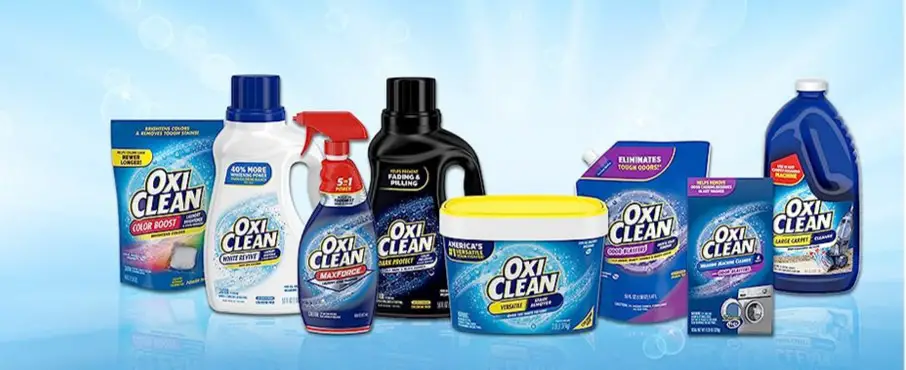
Some specialty OxiClean products may contain antibacterial claims or additional ingredients.
Always read:
- Product labels
- Directions
- Germ-killing claims carefully
If a product is designed as a disinfectant, it will usually clearly state:
- What germs it kills
- Contact time required
- Surface recommendations
Frequently Asked Questions
Is OxiClean antibacterial?
Most standard formulas are not specifically antibacterial disinfectants.
Does OxiClean sanitize laundry?
It may help reduce some microbes through cleaning action, but it is not primarily a sanitizer.
Can OxiClean replace bleach?
For stain removal and brightening, sometimes yes. For strong disinfection, bleach is generally more effective.
Does OxiClean kill ringworm fungus?
It may help clean contaminated fabrics, but hot water, antifungal treatments, and proper drying are more reliable.
Is oxygen bleach safer than chlorine bleach?
Oxygen cleaners are often gentler on fabrics and colors.
Final Thoughts
Most standard OxiClean products are not true disinfectants, even though they are highly effective cleaners and stain removers. They help remove dirt, stains, odors, and some microbes during washing, but they are generally not intended to fully disinfect surfaces or laundry the way bleach or dedicated disinfecting products do.
For everyday cleaning and stain removal, OxiClean works extremely well. However, in situations involving illness, mold, fungal contamination, or serious germ concerns, you may still need a proper disinfectant or laundry sanitizer for more complete protection.
Understanding the difference between cleaning and disinfecting can help you choose the right product for your specific laundry and household cleaning needs.
How to Use OxiClean Disinfectant Spray
Oxiclean Disinfectant Spray is designed to kill 99.9% of bacteria and viruses on hard, non-porous surfaces. Here are the steps to use Oxiclean Disinfectant Spray:
- Shake the bottle well before using it.
- Hold the bottle upright and spray the surface from a distance of 6-8 inches until the surface is thoroughly wet.
- Leave the surface wet for 10 minutes to allow the product to work effectively against bacteria and viruses.
- After 10 minutes, wipe the surface with a clean, damp cloth or sponge to remove any remaining product.
- If the surface is heavily soiled, clean it with a suitable cleaning product before using the OxiClean Disinfectant Spray.
- Always test the product in an inconspicuous area before using it on a visible surface to ensure that it does not cause any discoloration or damage.
- Keep the product out of reach of children and pets, and avoid contact with the eyes and skin. In case of contact, rinse thoroughly with water.
- Store the product in a cool, dry place away from heat or flames.