
There’s nothing quite like the feeling of cruising down the highway with the windows down, the wind in your hair, and the fresh smell of a brand-new car or your favourite air freshener filling your nostrils. But what happens when that pleasant aroma is replaced with a damp, musty smell? If you’ve ever spilled water in your car, you know all too well how quickly that damp, musty odour can take over and linger for days, if not weeks. That’s why we’ve compiled a list of fantastic tips to help you tackle the root of the problem and eliminate the musty smell from your car once and for all.
With these simple solutions, you’ll be back to enjoying that fresh car smell in no time!
What Does Water Damage Smell Like in a Car?
Water damage in a car can cause a variety of unpleasant smells that are often associated with dampness and mold. The smell of water damage can vary depending on the severity and duration of the damage, as well as the type of water that caused it.
One common odor associated with water damage in a car is a musty or moldy smell. This can be caused by the growth of mold and mildew on surfaces that have been exposed to moisture for an extended period of time. Another common odor is a sour or stale smell, which can be caused by standing water that has not been properly dried or cleaned up.
In addition to these smells, water damage in a car can also cause a range of other odors such as a damp or humid smell, a sewage-like smell, or even a rotting smell in extreme cases where the water damage has caused structural damage to the car.
Does Water Damage Smell Go Away?
If the water damage is minor and quickly remedied, such as cleaning up spilled water or drying out wet carpets, the smell may go away relatively quickly. However, if the water damage is more severe, such as flooding or prolonged exposure to moisture, the smell may linger for a long time or even permanently if not properly addressed.
One of the main causes of lingering odors from water damage is mold growth. If mold has started to grow, it can continue to produce unpleasant odors even after the moisture has been removed. In this case, it’s crucial to address the mold growth promptly and thoroughly to eliminate the source of the smell.
Will Wet Carpet Smell Go Away?
If the carpet is wet due to a recent spill or flood, it is essential to dry the carpet as quickly as possible to prevent mold and mildew growth, which can cause long-lasting odors. In this case, the faster you dry the carpet, the better the chances are that the smell will go away.
If the wet carpet smell persists even after the carpet is dry, there could be several reasons for this. The carpet padding or subfloor beneath the carpet may still be wet and must be dried or replaced to eliminate the odor. If mold or mildew has already developed, it may be necessary to remove the affected areas of the carpet and padding and treat the subfloor with a mold and mildew remover.
I Spilled Water in My Car and It Smells
If you spilled water in your car and it smells, there are a few things you can do to get rid of the odor:
- Soak up the water: Use a towel or a wet/dry vacuum to soak up as much of the water as possible. The longer the water sits, the more likely it is to cause mold and mildew growth, which can lead to unpleasant odors.
- Air out the car: Open the windows and doors to allow fresh air to circulate through the car. You can also use a fan to help circulate the air.
- Use baking soda: Sprinkle baking soda over the affected area and let it sit for several hours, or even overnight. Baking soda is an excellent natural deodorizer and can help absorb any lingering odors.
- Use a commercial odor eliminator: If the smell persists, you can use a commercial odor eliminator specifically designed for use in cars.
- Check for mold and mildew: If the water was not cleaned up quickly, there is a possibility that mold and mildew may have developed. If this is the case, you may need to take more aggressive steps to eliminate the odor, such as using a mold and mildew remover.
How Do You Get Spilled Water Smell Out of Car?
Getting rid of spilled water smell in a car can be a challenging task, but there are a few methods you can try to remove the odor:
- Blot up as much of the water as possible with a clean cloth or paper towels. This will help to prevent mold and mildew from growing.
- Sprinkle baking soda over the smelly area in the car and let it sit for a few hours. Baking soda can absorb odors and help to neutralize them.
- Use a vacuum cleaner with a hose attachment to remove the baking soda and any remaining moisture.
- Spray the affected area with a mixture of equal parts water and white vinegar. Vinegar is a natural deodorizer and can help to eliminate the smell.
- Let the vinegar solution sit for a few hours, then use a clean cloth to blot up any remaining moisture.
- If the smell persists, you can try using an odor eliminator spray or an air freshener designed specifically for cars.
- To prevent future spills and odors, make sure to always keep drinks in spill-proof containers and clean up any spills as soon as possible.
How Do You Get a Wet Sour Smell Out of a Car?
There are several methods you can try to get rid of a wet sour smell in your car. Here are some suggestions:
- Clean the source of the odor: If the smell is caused by spilled food or drinks, or any other organic matter, make sure to clean it up thoroughly. Use a damp cloth and a mild detergent to wipe down the affected area, then rinse with clean water and dry.
- Use an odor absorber: You can try using an odor absorber such as activated charcoal or baking soda. Sprinkle a generous amount of baking soda on the affected area, let it sit for several hours or overnight, then vacuum it up. Alternatively, you can place activated charcoal in a bowl or a cloth bag and leave it in the car for a few days.
- Use an air freshener: You can try using an air freshener to mask the odor. However, be careful not to use an air freshener that is too strong or overpowering, as this can be unpleasant and may even cause headaches or other health problems.
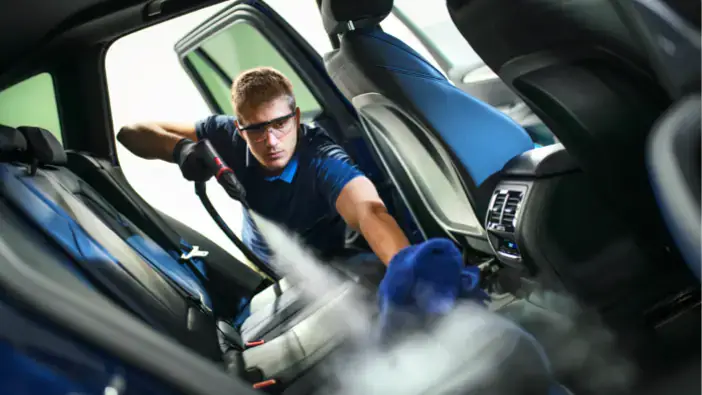
- Use a steam cleaner: If the odor persists, you may need to use a steam cleaner to deep clean the affected area. This can help to remove any bacteria or mold that may be causing the odor.
White Vinegar to Remove Smell in Car
White vinegar is a natural and effective way to remove odors from a car. Here are the steps to use white vinegar to remove a smell from your car:
- First, remove any source of moisture from the car. Use a towel or cloth to blot up any wet areas, such as spills or damp upholstery.
- Mix equal parts white vinegar and water in a spray bottle. Shake well to ensure it is thoroughly mixed.
- Spray the mixture generously over the carpets, seats, and other surfaces of the car. Make sure to saturate the affected areas.
- Allow the mixture to sit for at least 15-20 minutes. This will give the vinegar time to neutralize the odors.
- Use a clean towel or cloth to blot up the excess vinegar mixture.
- Open all the doors and windows of the car and let it air out for several hours. This will help remove any lingering vinegar smell.
Damp Smell in Car Air Conditioning
A damp or musty smell coming from your car’s air conditioning system is usually caused by the growth of mold or bacteria. This can happen when moisture builds up in the system, such as when the air conditioning is used frequently or when there is a leak in the system.
Here are some steps you can take to get rid of the damp smell in your car’s air conditioning:
- Turn off the air conditioning and open the windows to let fresh air circulate in the car.
- Check the air filter and replace it if it is dirty or clogged. A dirty air filter can cause the air conditioning system to work harder and may contribute to the growth of mold and bacteria.
- Use a commercial air conditioning cleaner or deodorizer. These products are designed to kill mold and bacteria and eliminate odors. Follow the instructions on the product carefully.
- Clean the air conditioning system’s evaporator coil. This may require the assistance of a professional mechanic, as it can be a complex process.
- Use a moisture absorber or desiccant in the car. These products can help remove excess moisture from the air and prevent mold and bacteria growth.

Hi Everyone, BeYoungAholic’s aim is to help women who have lost their self-confidence because of the way they look. We will provide you tips and bits of advice on how to take care of yourself and maintain your youthful look. So, Enjoy the blog!