
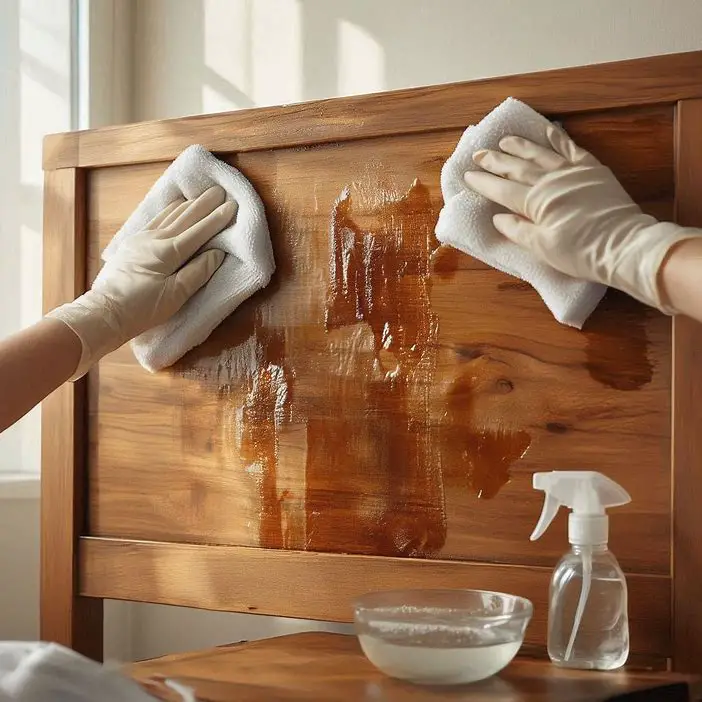
Scalp oil stains on a headboard are a common problem, especially on upholstered, wooden, leather, or fabric-covered headboards. Natural oils from your hair and scalp gradually transfer onto the surface while you sleep, leaving behind dark spots, greasy marks, discoloration, and sometimes unpleasant odors over time.
Hair products such as leave-in conditioners, serums, pomades, and styling oils can make the buildup even worse. If left untreated, the oil can soak deeper into fabric or wood finishes, making the stains harder to remove.
Fortunately, most scalp oil stains can be cleaned successfully using simple household products and the right cleaning method for your headboard material. In this guide, you’ll learn how to remove scalp oil from different types of headboards safely, how to avoid damaging the surface, and how to prevent future buildup.
Why Scalp Oil Builds Up on Headboards
Your scalp naturally produces sebum, an oily substance that helps protect and moisturize the skin and hair. While sleeping, these oils transfer onto nearby surfaces.
Several factors increase buildup:
- Oily hair or scalp
- Sleeping with wet hair
- Hair styling products
- Infrequent hair washing
- Light-colored headboards
- Fabric upholstery that absorbs oil easily
Over time, repeated exposure creates noticeable greasy stains and discoloration.
Identify Your Headboard Material First
Before cleaning, determine what type of headboard you have because each material requires a different approach.
Common headboard materials include:
- Upholstered fabric
- Faux leather
- Genuine leather
- Wood
- Metal
- Velvet
- Suede or microfiber
Using the wrong cleaner may cause fading, water stains, or surface damage.
Supplies You May Need
Gathering supplies beforehand makes cleaning easier.
Common Cleaning Items
- Microfiber cloths
- Mild dish soap
- Warm water
- Baking soda
- White vinegar
- Soft brush
- Vacuum cleaner
- Spray bottle
- Paper towels
- Cornstarch
- Upholstery cleaner
For delicate materials, always test cleaning solutions on a hidden spot first.
How To Remove Scalp Oil From Fabric Headboards
Fabric headboards absorb oils deeply, making prompt cleaning important.
Step 1: Vacuum the Surface
Use a vacuum with a brush attachment to remove:
- Dust
- Hair
- Loose debris
This prevents dirt from spreading during cleaning.
Step 2: Absorb Fresh Oil With Baking Soda or Cornstarch
If the stain is recent:
- Sprinkle baking soda or cornstarch generously over the oily area.
- Let it sit for 15–30 minutes.
- Vacuum thoroughly.
Both powders help absorb excess grease before deeper cleaning.
Step 3: Prepare a Mild Cleaning Solution
Mix:
- A few drops of dish soap
- Warm water
Dish soap works well because it cuts through oils effectively.
Step 4: Blot the Stain
- Dip a microfiber cloth into the solution.
- Wring out excess moisture.
- Blot the oily area gently.
Avoid soaking the fabric because too much water can leave stains or encourage mildew.
Do not scrub aggressively, especially on delicate upholstery.
Step 5: Rinse Lightly
Use another damp cloth with clean water to remove soap residue.
Blot dry with towels afterward.
Step 6: Allow the Headboard To Dry Fully
Use:
- Fans
- Open windows
- Gentle airflow
Complete drying helps prevent musty smells.
How To Remove Old Oil Stains From Upholstery
Older stains may require deeper cleaning.
Vinegar Cleaning Method
Solution
Mix:
- Equal parts white vinegar and water
Instructions
- Lightly spray the stained area.
- Let sit for 5–10 minutes.
- Blot gently with a clean cloth.
- Repeat if necessary.
White vinegar helps break down oily residue and neutralize odors.
Upholstery Cleaner Method
For stubborn buildup:
- Use a fabric-safe upholstery cleaner
- Follow product instructions carefully
A soft-bristle brush may help loosen older grime.
Cleaning Scalp Oil From Leather Headboards
Leather requires gentler care because harsh cleaners may dry or crack the material.
Step 1: Wipe Surface Oils
Use a dry microfiber cloth to remove surface grease first.
Step 2: Use Mild Soap Solution
Mix:
- Small amount of mild dish soap
- Warm water
Dampen a cloth lightly and wipe the affected area carefully.
Do not oversaturate leather.
Step 3: Dry Immediately
Use a clean towel to dry the leather completely.
Leaving moisture on leather can damage the finish.
Step 4: Apply Leather Conditioner
After cleaning, apply a leather conditioner to restore moisture and prevent cracking.
Avoid These on Leather
Do not use:
- Bleach
- Excess vinegar
- Harsh alcohol cleaners
- Abrasive scrubbing pads
These can permanently damage leather surfaces.
How To Clean Faux Leather Headboards
Faux leather is generally easier to clean than genuine leather.
Cleaning Steps
- Wipe with warm soapy water.
- Use a microfiber cloth.
- Rinse lightly with clean water.
- Dry thoroughly.
For greasy buildup, a small amount of diluted vinegar may help.
Avoid excessive moisture around seams.
Removing Scalp Oil From Wooden Headboards
Wood surfaces can develop greasy dark patches over time.
Step 1: Dust the Surface
Remove loose dust first using a dry cloth.
Step 2: Use Dish Soap Solution
Mix:
- Warm water
- Few drops of dish soap
Dampen a soft cloth and wipe oily spots gently.
Avoid soaking wood because water may warp or stain it.
Step 3: Dry Immediately
Use a dry microfiber towel right after cleaning.
Step 4: Polish if Needed
Wood polish or furniture conditioner can restore shine after cleaning.
Removing Heavy Oil Buildup From Wood
For stubborn grease:
- Sprinkle baking soda lightly onto the stain.
- Rub gently with a damp cloth.
- Wipe clean immediately.
Avoid aggressive scrubbing that could damage wood finishes.
How To Remove Odors Along With Oil Stains
Scalp oil buildup sometimes creates musty or sour smells.
Baking Soda Deodorizing Method
- Sprinkle baking soda over fabric surfaces.
- Leave overnight if possible.
- Vacuum thoroughly.
Vinegar Spray for Odor Neutralizing
A light vinegar-water mist may help reduce lingering odors on fabric headboards.
Do not oversaturate the material.
Steam Cleaning Upholstered Headboards
Steam cleaning may help deep-clean stubborn oily buildup.
However, excessive moisture can damage some fabrics.
Before Steam Cleaning
- Check manufacturer recommendations
- Test a hidden area first
- Use minimal moisture
Ensure the headboard dries completely afterward.
Common Mistakes To Avoid
Scrubbing Too Hard
Aggressive scrubbing can:
- Damage fabric fibers
- Fade colors
- Scratch leather or wood
Using Too Much Water
Excess moisture may:
- Create water stains
- Encourage mold
- Damage wood
- Soak upholstery padding
Ignoring Small Stains
Oil buildup becomes harder to remove the longer it sits.
Using Harsh Chemicals
Strong cleaners may discolor or weaken the material.
Always use gentle products first.
Preventing Scalp Oil Stains on Headboards
Prevention is much easier than repeated deep cleaning.
Wash Hair Regularly
Reducing excess scalp oil naturally helps limit buildup.
Avoid Sleeping With Wet Hair
Wet hair transfers oils and moisture more easily.
Use a Pillow Barrier
Position pillows between your head and the headboard to reduce direct contact.
Cover the Headboard
Fabric slipcovers or washable protectors help shield upholstered surfaces.
Clean the Headboard Regularly
Routine maintenance prevents heavy buildup.
Weekly Maintenance
- Dust surfaces
- Vacuum upholstery
- Wipe leather or wood lightly
Reduce Heavy Hair Product Use Before Bed
Oils, serums, and pomades can transfer onto furniture overnight.
Best Cleaning Products for Oil Removal
Some products work especially well for greasy buildup.
Helpful Options
- Mild dish soap
- Baking soda
- Cornstarch
- Upholstery foam cleaners
- White vinegar
- Leather-safe cleaners
Always choose products suitable for your specific material.
When Professional Cleaning May Be Necessary
Some severe stains may require professional help.
Consider Professional Cleaning If
- Oil stains are very old
- Upholstery padding is saturated
- Odors remain after cleaning
- Delicate fabrics are involved
- The material is expensive or antique
Professional upholstery cleaners use specialized extraction equipment and fabric-safe solutions.
Frequently Asked Questions
Can scalp oil permanently stain a headboard?
Yes. Over time, oils can soak deeply into fabric or wood finishes if not cleaned promptly.
Does baking soda remove oil stains?
Yes. Baking soda helps absorb grease and reduce odors effectively.
Is vinegar safe for upholstered headboards?
Usually yes when diluted properly, but always test a hidden area first.
Can I use alcohol to clean scalp oil?
Small amounts of diluted rubbing alcohol may help on some surfaces, but it can damage leather and certain fabrics.
How often should I clean my headboard?
Light cleaning every few weeks helps prevent noticeable buildup.
Final Thoughts
Scalp oil stains on headboards are common, but they are usually manageable with the right cleaning approach. Whether your headboard is upholstered, leather, faux leather, or wood, gentle cleaning methods using mild soap, baking soda, or diluted vinegar can often remove greasy buildup successfully.
The key is cleaning stains early before oils soak deeply into the material. Regular maintenance, reduced hair product transfer, and protective barriers can also help keep your headboard cleaner for much longer.
With consistent care, you can remove scalp oil stains effectively and keep your bedroom looking fresher, cleaner, and more comfortable.

Hi Everyone, BeYoungAholic’s aim is to help women who have lost their self-confidence because of the way they look. We will provide you tips and bits of advice on how to take care of yourself and maintain your youthful look. So, Enjoy the blog!